Design Careers for Students: Explore Creative Careers in Games, Fashion, Apps and Spaces.
Explore design careers for students across games, fashion, apps, interiors, products and branding—and learn how to discover which creative field may be right for you.
Many students enjoy drawing, gaming, fashion, technology, interiors or creating things—but do not know which creative career to choose.
If you are asking, “What are the different design careers?”, “Do I need to be good at drawing to study design?” or “Which design field is right for me?”, this guide will help you understand the world of design careers.
Design is not limited to fashion design or architecture. It includes the people who create the games you play, the apps you use, the sneakers you want, the cafés you save and the brands you remember.
What are design careers?
Design careers involve creating products, visuals, spaces, services and digital experiences that solve problems for people.
A designer does not only make things look attractive. A designer thinks about how something works, how it feels and how people will use it.
For example:
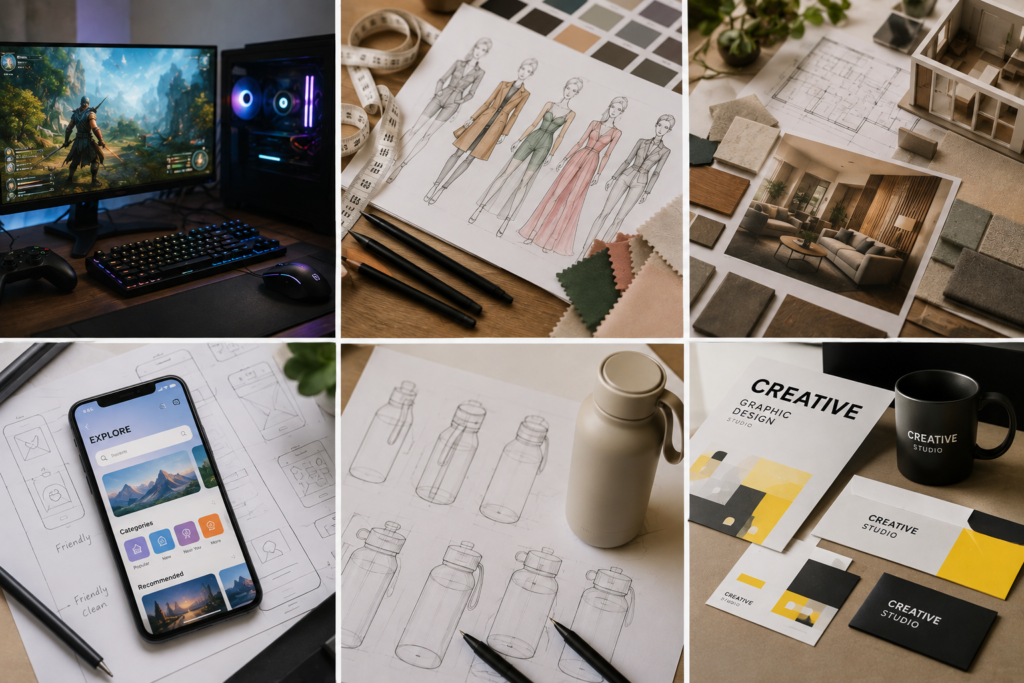
- A game designer creates game rules, levels and player experiences.
- A UX/UI designer makes apps and websites easier to use.
- A product designer improves everyday objects, from water bottles to furniture.
- An interior designer creates functional and meaningful spaces.
- A fashion or footwear designer designs clothing, accessories and shoes.
- A graphic or communication designer creates posters, packaging, logos and visual identities.
Design careers combine creativity, problem-solving and an understanding of people.
How do I know if design is the right career for me?
You may already be interested in a design career if you naturally notice the world around you.
Do you pause a game because the characters, sets or virtual worlds look incredible?
Do you save café interiors, hotel rooms or bedroom ideas?
Do you notice why one app feels simple while another feels confusing?
Do you look closely at sneaker colours, packaging, logos or product details?
These are not small or random interests. They can be early signs that you enjoy observing design.
Students who enjoy asking “Why is this made this way?” or “How can this be better?” often have a strong design mindset.
Do I need to be good at drawing to study design?
No. You do not need to be an expert artist to explore a design career.
Drawing is useful because it helps you communicate ideas. However, design also needs many other skills:
- Observation
- Curiosity
- Creativity
- Empathy
- Problem-solving
- Communication
- Research and critical thinking
For example, if you notice that a school bag hurts your shoulders, a food-delivery app is difficult to use or a café makes people feel comfortable, you are already observing how design affects people.
Design is not only about drawing a beautiful object. It is about identifying a problem and imagining a better solution.
What are the different design careers for students to explore?
There are many creative career options in design. Your personal interests can help you explore the right field.
| If you enjoy… | Design careers you can explore |
|---|---|
| Games, characters and storytelling | Game design, animation, character design, 3D design, UI design |
| Fashion, clothes and sneakers | Fashion design, footwear design, styling, textile design, brand design |
| Cafés, hotels, rooms and buildings | Interior design, spatial design, hospitality design, architecture |
| Apps, websites and technology | UX/UI design, interaction design, product design |
| Posters, logos, packaging and brands | Graphic design, communication design, visual design, branding |
| Everyday objects and problem-solving | Product design, industrial design, service design |
You do not have to select one design career immediately. Start by exploring the fields that genuinely interest you.
When should students start preparing for a design career?
Students can start exploring design as early as Grade 8 or Grade 9.
At this stage, the goal is not to decide a career too early. It is to build important skills: observation, creativity, confidence, visual thinking and problem-solving.
Students in Grade 10, 11 and 12 can begin exploring design colleges, design courses and entrance exams such as NID, NIFT, UCEED and NATA—depending on the fields that interest them.
The best first step is not only preparation. It is understanding yourself: what you enjoy, the problems you notice and the kind of work you want to create.
A design career begins with noticing problems
Many important design ideas begin with one simple question: “What if this could be better?”
In the first episode of The Designers’ World, Studio Atelier explores the story of Vinisha Umashankar.
At age 12, she noticed a street-side ironing vendor using charcoal to heat an iron. Most people saw an everyday routine. Vinisha saw smoke, pollution and an opportunity to design a cleaner solution.
She created a solar-powered ironing cart. Her idea later took her to COP26.
Her story shows students that design does not begin with a college degree or a job title. It begins with curiosity, observation and the confidence to solve a problem.

Explore design careers with The Designers’ World
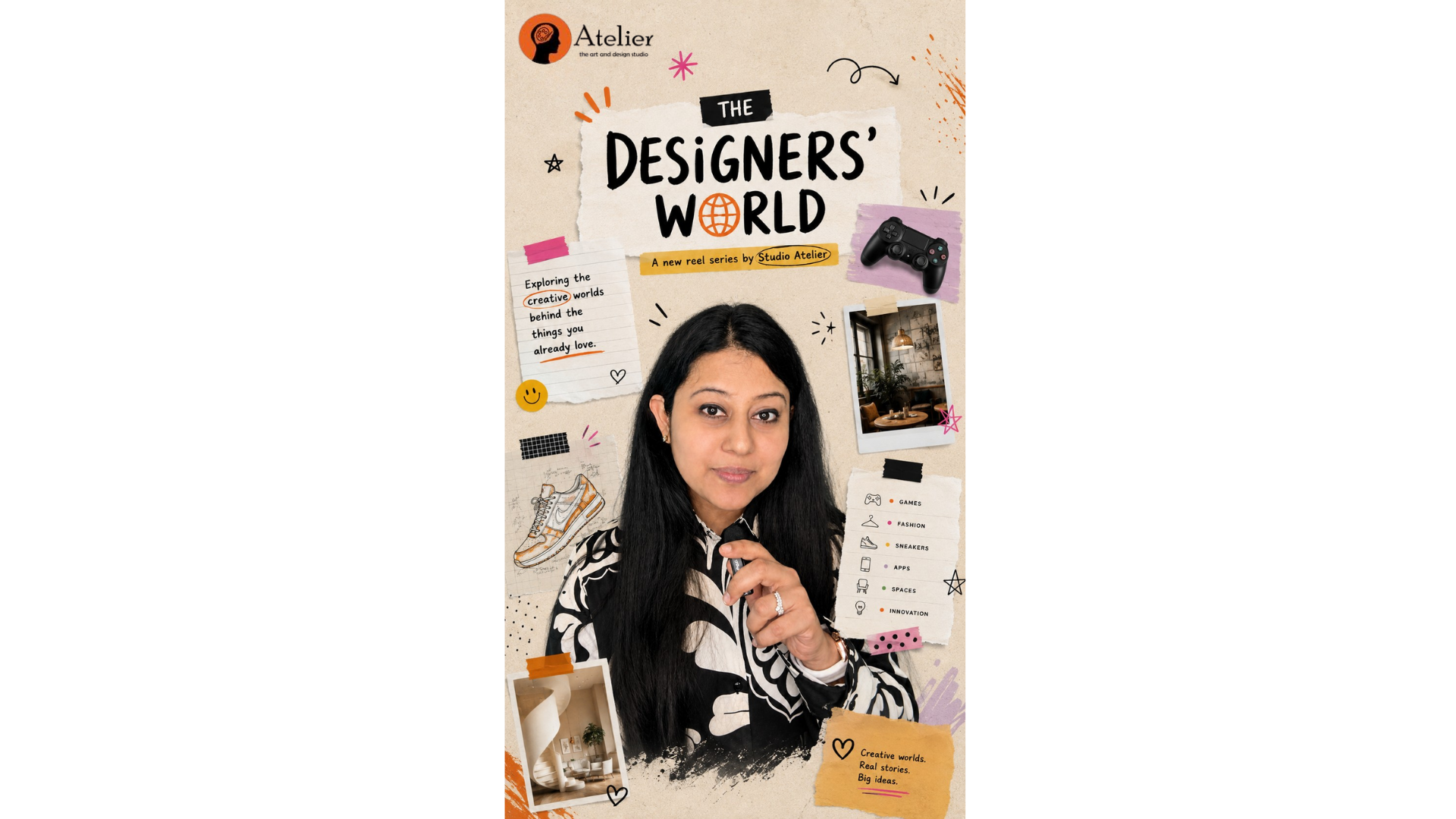
The Designers’ World is Studio Atelier’s series for students who are curious about design careers and creative careers.
Through games, fashion, sneakers, apps, interiors, spaces and innovation, we explore the stories and design fields behind the things students already love.
You do not need to have your entire future planned today.
You only need to start noticing the world differently.