What Does It Mean to Be Literate in the Age of AI?
AI can generate answers faster than ever, but students still need to question, evaluate and decide what is worth creating. Here’s why design literacy and human judgement matter in an AI-powered future.
What Does It Mean to Be Literate in the Age of AI?
For generations, literacy meant being able to read, write and work with numbers.
As the world became digital, the definition expanded. Being literate also meant knowing how to search for information, use digital tools and navigate the online world responsibly.
Now, artificial intelligence is changing that definition again.
AI can write, summarise, translate, generate images, analyse data and suggest ideas in seconds.
That is incredibly useful.
But it also means that being able to produce an answer is no longer enough.
The more important questions are becoming:
- Is this answer accurate?
- Does it solve the actual problem?
- Who are we solving it for?
- What information is missing?
- What should be improved before this is used in the real world?
In the age of AI, literacy must also include the ability to question, evaluate and make responsible decisions.
The World Does Not Only Need People Who Can Use AI
It needs people who can use it with judgement.
AI can generate ten campaign ideas, suggest a product concept or create the first draft of a business plan.
But generating possibilities and deciding which possibility is actually useful are two different things.
AI does not automatically understand why an elderly person may find a payment app confusing.
It may not understand the anxiety of a patient entering a hospital or why a student struggles with an online learning platform.
That understanding still comes from people.
It comes from observing, listening, asking questions and testing whether a solution actually works.
These are also some of the foundations of design thinking.
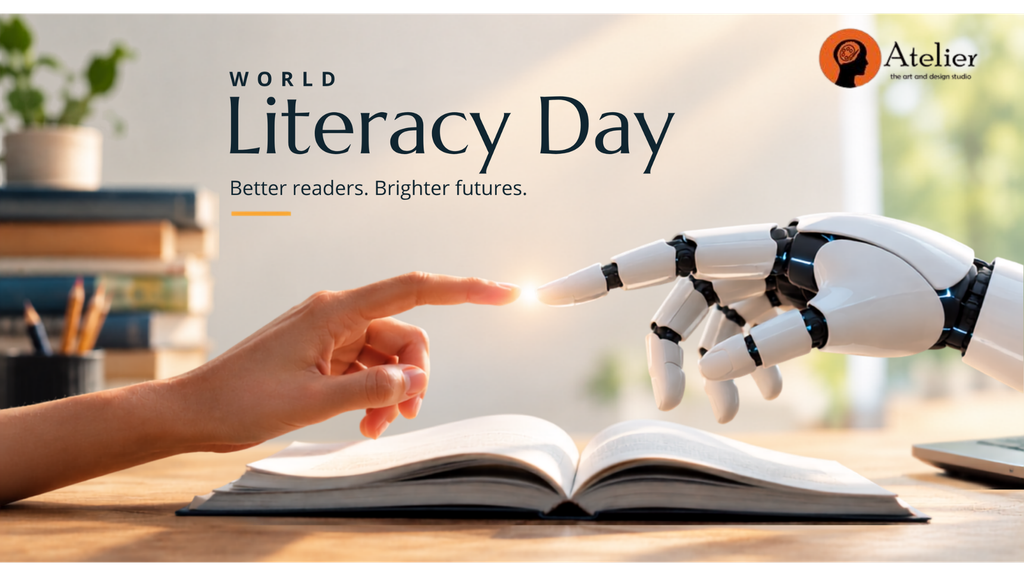
Design Literacy Is Bigger Than Drawing
Design literacy is often misunderstood as learning to draw well or use creative software.
But it is much broader.
At its core, design literacy is the ability to look at everyday life and ask:
What is working? What is not working? And how could it be improved?
Think about the experiences we use every day.
A payment app must be easy enough for a first-time user.
A hospital service should reduce confusion for patients and families.
A public transport system should help people understand routes and platforms.
An online learning platform should make difficult ideas easier to understand.
Behind each of these experiences is a human problem.
Technology may enable the solution. Human understanding makes the solution valuable.
Why This Matters for Students’ Careers
Students often ask:
“Will AI take away jobs?”
A more useful question may be:
“What skills will help me remain valuable when AI is available to everyone?”
The World Economic Forum’s Future of Jobs Report 2025 says employers expect 39% of workers’ core skills to change by 2030.
Among the skills expected to grow in importance are AI and big data, technological literacy, analytical thinking, creative thinking, resilience and lifelong learning.
World Economic Forum – Future of Jobs Report 2025
The message for students is important:
The future will need technology skills and human skills together.
Knowing how to use AI will help.
But so will knowing how to define a problem, understand another person’s needs, check information, communicate ideas, collaborate and improve a solution.
These abilities matter whether a student eventually chooses medicine, engineering, business, law, technology, entrepreneurship or design.
What Does NEP 2020 Have to Do With This?
India’s National Education Policy 2020 also recognises that education must move beyond memorising information.
It emphasises critical thinking, creativity, inquiry, problem-solving, experiential learning and multidisciplinary education.
National Education Policy 2020
NEP 2020 does not make Design Thinking a compulsory standalone subject in every college course.
But many of the abilities it encourages are closely connected to design thinking:
learning by doing, questioning assumptions, understanding problems and developing practical solutions.
This is why design thinking does not need to be relevant only to students who want to become designers.
It can help students prepare for almost any future.
What Should Students Start Learning Now?
Students do not need to wait until college to develop these abilities.
They can start by learning to:
- observe before jumping to a solution
- understand who is affected by a problem
- check whether information is reliable
- explore more than one possibility
- create, test and improve ideas
- listen to feedback
- use AI as a thinking partner rather than a replacement for thinking
These habits help students move from:
“I don’t know what to do.”
to:
“What can I understand, test and improve?”
AI Can Generate. Students Still Need to Decide.
AI can generate ideas, images, text, concepts and alternatives.
But students still need to decide:
Which idea is worth pursuing?
Which information can be trusted?
Which solution actually helps someone?
What should be changed?
As AI makes generation easier, human judgement may become even more valuable.
The advantage may not belong to the person who can generate the most answers.
It may belong to the person who knows which questions are worth asking.
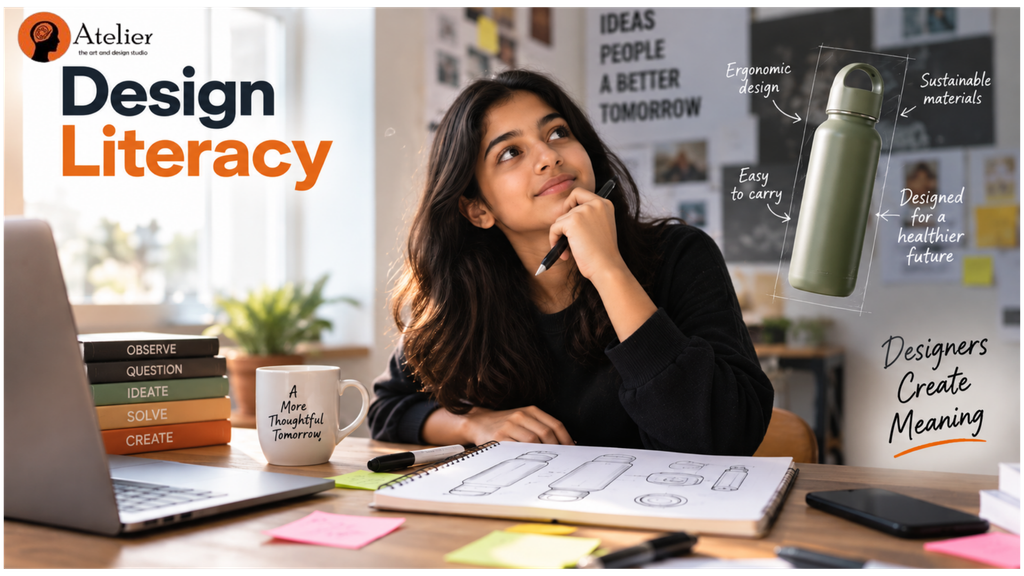
The Studio Atelier Approach
At Studio Atelier, students learn through observation, experimentation, creative exploration and real-world problem-solving.
They learn to understand people, explore possibilities, communicate ideas and improve solutions through feedback.
The objective is not to make every student choose design as a career.
It is to help students develop abilities they can carry into whatever future they choose:
curiosity, creativity, judgement, confidence and problem-solving.
Because AI will continue to evolve.
The tools students use five or ten years from now may look completely different from the tools they use today.
So preparing students for the future cannot only mean teaching them the latest technology.
It also means teaching them how to think when technology keeps changing.
A New Kind of Literacy
Perhaps literacy in the age of AI is not simply about knowing how to use powerful tools.
It is about knowing when to question them.
To understand people.
To recognise problems.
To imagine alternatives.
And to decide what is actually worth creating.
AI can give us answers faster than ever.
Our advantage will be knowing which answers to question, which problems are worth solving and what to create next.
See This Idea in Action
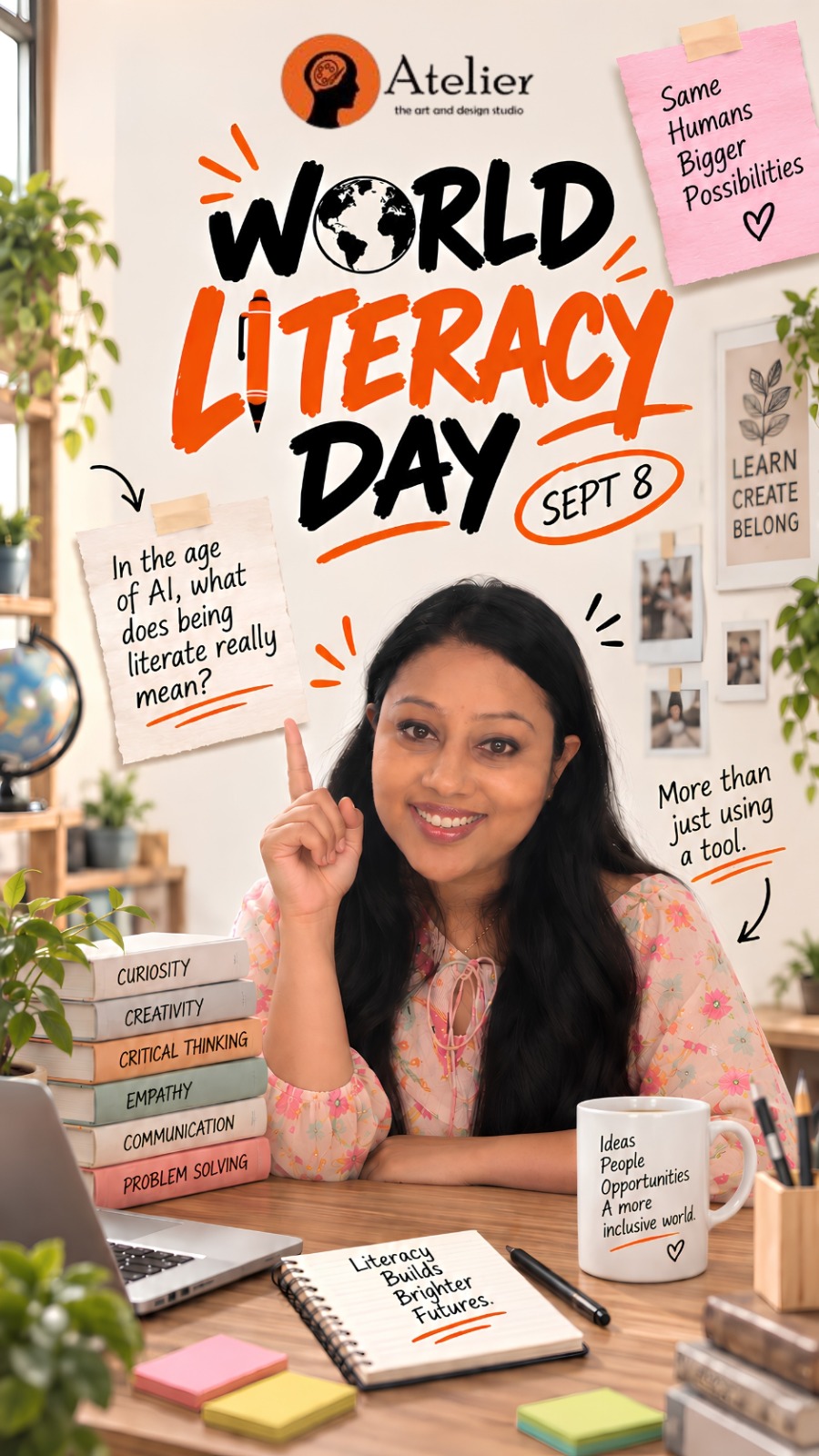
We explore this idea in our Design Discovery Reel — how students can build the thinking skills they will need in a world shaped by AI.
 ▶
▶
What does it mean to be literate in the age of AI?
See why students need more than the ability to use AI — they also need judgement, curiosity, critical thinking and the confidence to question the answers technology gives them.
Watch on Instagram →