If AI Keeps Getting Smarter, What Will Keep Students Ahead?
As AI gets better at generating answers, what will help students stay ahead? Explore why curiosity, creative thinking, problem-solving and asking better questions may become some of the most valuable future skills.
I’ve tightened it slightly so it stays distinct from the AI-literacy article and keeps the focus on future skills, curiosity, Design Discovery, and better question-asking.
You can copy-paste this directly into WordPress:
A student can now ask AI to explain a difficult concept, generate twenty ideas, write a presentation, create an image, research a topic or suggest a solution—in seconds.
And this is only the beginning.
By the time today’s school students enter college and eventually the workplace, the tools they use will probably be far more capable than the ones impressing us today.
So perhaps the question we should be asking isn’t:
“How do we prepare students to compete with AI?”
It is:
“What should students become better at because AI exists?”
That changes the conversation completely.
Having Answers Is Becoming Easier. Knowing What to Do With Them Isn’t.
For a long time, education has placed enormous value on knowing the right answer.
But when information and answers are available almost instantly, another set of abilities becomes increasingly important.
Can a student recognise which problem is worth solving?
Can they question the first answer they receive?
Can they notice something others have overlooked?
Can they take an idea and make it better?
Can they understand what another person actually needs?
These are very different abilities from simply knowing more information.
And this is where creative thinking and design thinking for students become especially relevant in an AI-powered world.
AI can give students possibilities.
But someone still has to decide which possibilities are worth exploring.
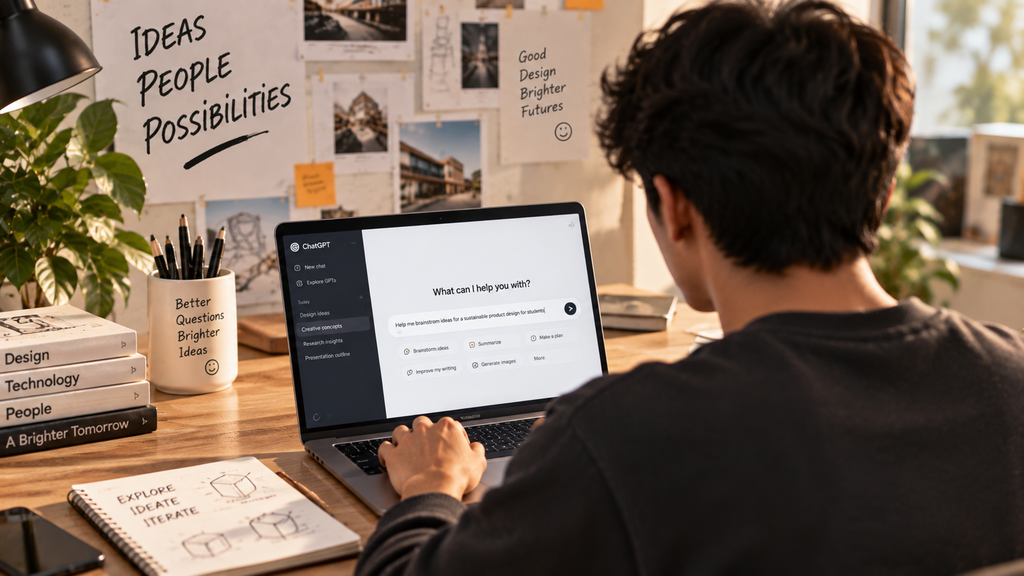
Think About Something as Simple as a School Bag
AI could generate hundreds of school-bag concepts in minutes.
Different colours. Different materials. Different shapes. Different features.
But before generating anything, a designer might notice something else.
Perhaps younger students struggle to organise their books.
Perhaps the bag becomes uncomfortable during a long commute.
Perhaps something they need frequently is always difficult to reach.
Suddenly, the challenge is no longer:
“Can I generate a cool school-bag design?”
It becomes:
“What could make this experience better for someone?”
That shift—from producing an answer to understanding the problem—is one of the reasons design education can be so valuable for young students.
Design Isn’t Only About Drawing
When students hear design, they may immediately think of sketching, fashion, graphics or making something look attractive.
Those can certainly be parts of design.
But look around and design becomes much broader.
The app you opened this morning was designed.
So was the chair you’re sitting on, your water bottle, classroom, favourite game, sneaker, food package and the way you move through a shopping mall.
Behind all of these are decisions about people, problems and experiences.
Once students begin seeing the world this way, design becomes less about “making things look good” and more about becoming curious about:
Why does this work this way?
Who is it working for?
Could it work differently?
This Is Where Design Discovery Comes In
At Studio Atelier, this is the thinking behind our Design Discovery programme.
We don’t believe younger students need to decide at an early age that they are going to become product designers, communication designers, architects or any other kind of creative professional.
There is time for that decision.
What they can begin developing earlier is the ability to observe, explore, question and create.
Through Design Discovery, students are introduced to different areas of the designed world—from products and spaces to games, brands and everyday experiences.
The deeper learning happens through projects, conversations, experimentation and feedback inside the studio.
Because the goal isn’t to give students a list of design careers and ask them to choose one.
It is to give them the opportunity to discover how they think when they’re given something interesting to solve.
So Where Does AI Fit Into All This?
Students do not need to grow up afraid of AI.
And pretending they won’t use it is not particularly useful either.
AI can become an extraordinary tool for research, exploration and creation.
But there is an important difference between using a powerful tool and allowing the tool to do all the thinking.
Give two students access to the same AI.
One might accept the first answer.
The other might question it, change the brief, combine unexpected ideas, notice what is missing and take the result somewhere completely different.
Same technology.
Very different thinking.
And increasingly, that difference may matter.
The Future May Belong to Better Question-Askers
We don’t know exactly what the workplace will look like when today’s Grade 8 or Grade 9 students enter it.
Some careers will change.
New ones will emerge.
Tools will continue evolving.
Trying to prepare a child for one fixed version of that future would be difficult.
But we can help them become more comfortable with curiosity, ambiguity, experimentation and unfamiliar problems.
That is why we see Design Discovery as much more than an early introduction to design careers.
It gives students space to explore how ideas become solutions and, in the process, begin discovering their own interests and ways of thinking.
AI will continue getting better at producing answers.
Perhaps one of the most valuable things we can give students is the confidence to look at those answers and ask:
“What else could this be?”
Because the future won’t only need people who know how to use intelligent tools.
It will need people who know where to take them next.
 ▶
▶
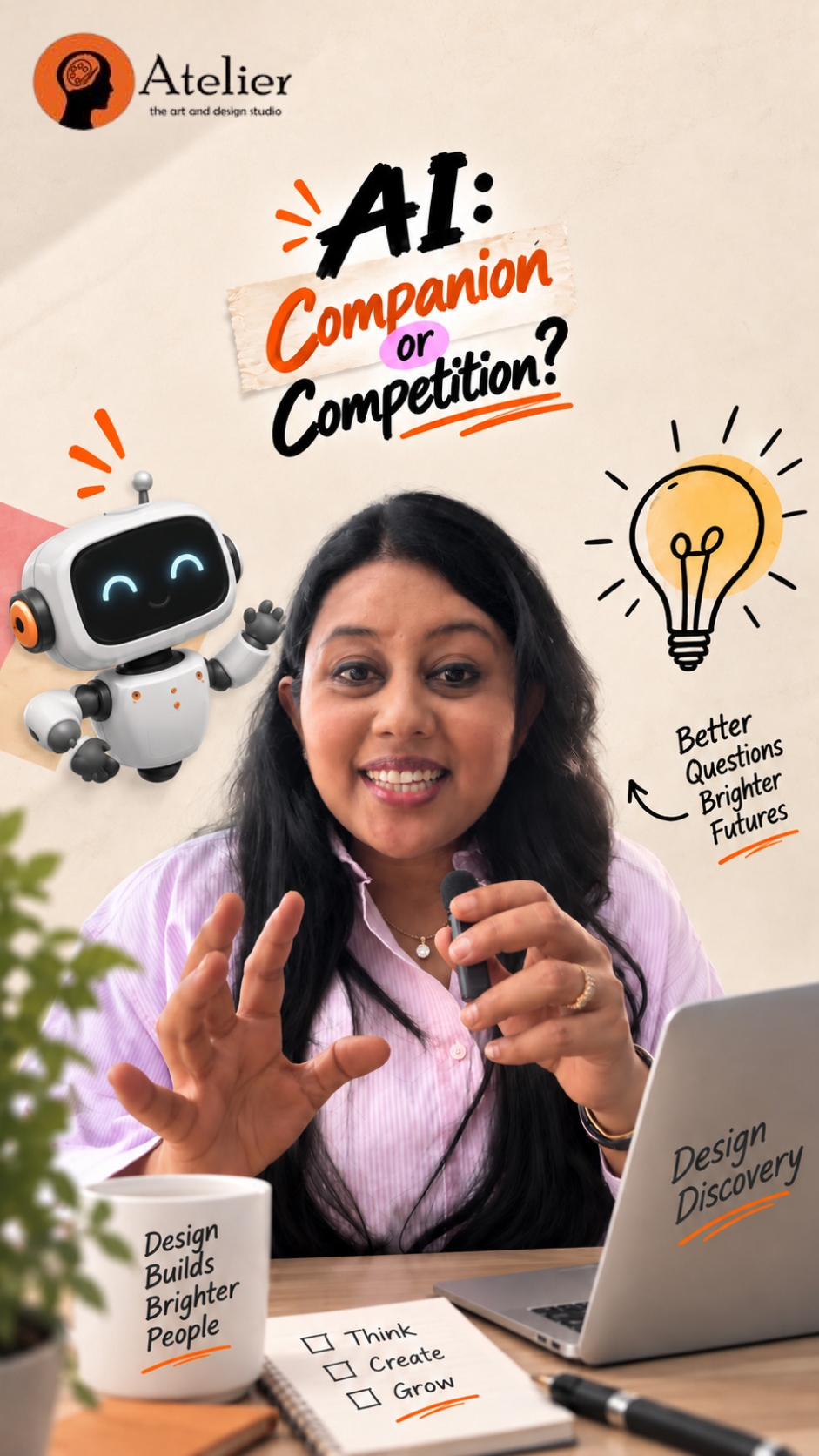
If AI keeps getting smarter, what will keep students ahead?
See why curiosity, creative thinking, problem-solving and asking better questions may become some of the most valuable skills for students in an AI-powered future.
Watch on Instagram →